
My older son, who's in the third grade now, has disliked History / Social Studies since he first encountered the subject. He knows that he should try to understand it, but he could never be interested in it. He doesn't show the same enthusiasm for it as he does with Math, Science, and Art. It was easy for him to see how lessons in math, science, and art could be applied in every day situations. But not history.
At first, I thought it had to do with his history teachers' methods or the books they use. But eventually I realized that developing an appreciation for history is also related to one's experience and maturity.
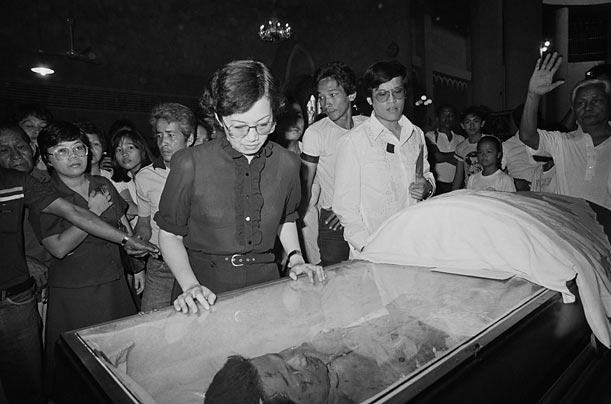
While watching former President Cory Aquino's funeral procession on the telly last year, I was in tears the entire time, which made my sons concerned and perplexed. I related to them an impromptu history lesson involving Cory, Ninoy, Marcos, and the Martial Law. They listened intently, but I could see in their eyes that -- as far as they were concerned -- I might as well be telling them bedtime stories or fairy tales. It made no difference to them whether or not they fully grasped the Aquino couple's sacrifices. Being all of 6 and 9 years old meant that their world was not yet big or complex enough. You can't blame them for thinking that history isn't interesting.
To make history matter to students, it must be discussed, debated about, dissected. Using open discourse as a teaching method is more appropriate to do with older students (high school and above), because at more mature ages, they would already know and understand about more things in the world, and they're able (hopefully) to think critically and consider how events in the past shaped or contributed to the present.

No comments:
Post a Comment